Christian Eriksen: How do athletes live with a cardiac defibrillator after a heart problem?
By OnzeActu · · 4 min read

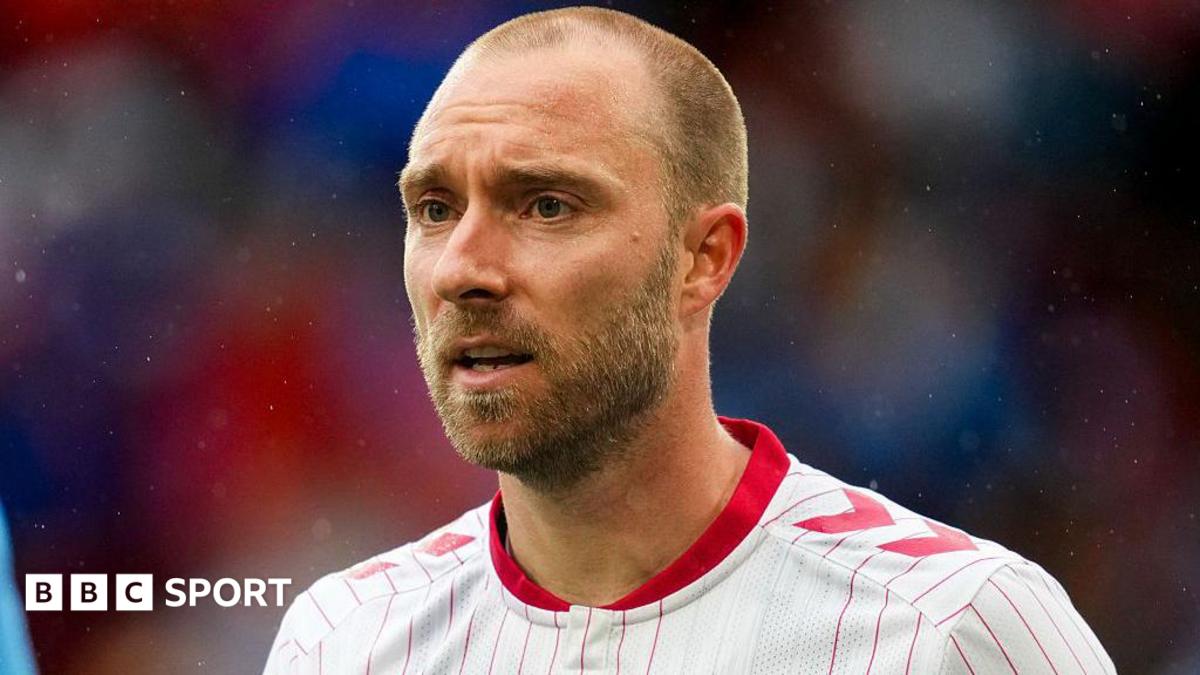
After his cardiac arrest in the middle of a match at Euro 2020, Christian Eriksen wears an implantable cardiac defibrillator (ICD) which can save his life in the event of a new abnormality. If certain championships authorize players with this device to continue their career, this decision remains complex and depends on the risks, medical advice and the personal choice of the athlete.
Christian Eriksen experienced a moment of great concern on Sunday during Denmark's friendly victory against Ukraine (2-1). The Danish midfielder, equipped with an implantable cardiac defibrillator (ICD) since his cardiac arrest at Euro 2020, collapsed on the pitch. A device connected to your heart, the ICD allows you to restore a regular heart rhythm using an electric shock in the event of detection of a serious abnormality. “The pacemaker reacted as expected,” confirmed the Danish selection doctor, Morten Boesen. The image of Eriksen on the ground, surrounded by his visibly upset teammates and treated by medical staff behind a curtain, recalled the shock experienced by the world of football almost three years ago.
What is the situation today with the return to competition for athletes with an ICD, what risks does this entail and what happens when the device is triggered?
Implantation of an ICD, a box the size of a cell phone connected to the heart by wires, can result from various pathologies: heart failure, coronary artery disease or rhythm disorders. Depending on the exact nature of the illness, a return to high-level sport can sometimes be considered. “Each case is unique,” emphasizes Doctor Amanda Lahti, specialized in sports medicine. The decision is collective, involving the club, the player, his agent and medical experts. They assess the potential risks and benefits. But ultimately, the player always has the last word, and he rarely wants to end his career, accepting risks that others would refuse. »
Note that certain championships such as Serie A formally prohibit players with ICD from participating in official matches. On the other hand, the Premier League, where Eriksen played with Brentford and then Manchester United, carries out individualized assessments. FIFA, UEFA as well as the Bundesliga, where Eriksen played last season with Wolfsburg, authorize players with ICD to compete in their competitions.
The medical view on this matter has evolved. “Around the 2000s, all sports, even amateur practice, were completely banned. Then, some athletes defied this ban and the ICD proved more effective than expected. These modern devices tolerate physical contact and deliver their shock quickly, even if they do not guarantee 100% survival. »
 Image
Image
The main concern of patients is the fear that the device will trigger during activity. Former England cricketer James Taylor, diagnosed with a genetic heart condition and fitted with an ICD before retiring at 26, says: “Rather than being afraid of it, you should see it as a friend who can save your life. The first time mine went off, I was on stage. I felt an explosion in my chest that threw me backwards, it was impressive. »
These defibrillators can also cause inappropriate shocks, triggered wrongly for example by an external noise: “Once, my ICD detected a heart rate at 500 beats per minute, even though it was the pool pump. I was thrown into the water, panicking that I was sick, but everything was fine. » Taylor uses a device to remotely download his ICD data for ongoing medical monitoring. Despite these incidents, this device gives him the confidence to practice sports such as golf or padel.
For other athletes, the dilemma is immense. Clive Clarke, former Leicester City footballer, who suffered an ICD after a cardiac arrest in 2007, explains that he returned to training but chose to stop his career, fearing the personal risks and the impact on his teammates: “I had a young family, and despite the desire to play again, I was not ready to push my limits at that risk. »
Clive Clarke also highlights the psychological and social effect of living with an ICD: “It’s reassuring, but the fact that the device can go off sometimes isolates you. For example, if this happens, you lose your driving license temporarily. I am on my third ICD. I am not sure that players should be allowed to play with such a device, because we also have to think about the stress that it would cause for their teammates and the staff in the event of a serious incident. »
Thus, despite medical and technological advances, pursuing an elite sporting career with an ICD remains a delicate choice, at the crossroads between passion, health risks and collective responsibilities.