2026 World Cup power ranking: ranking of the 48 teams in 5 levels
By OnzeActu · · 4 min read
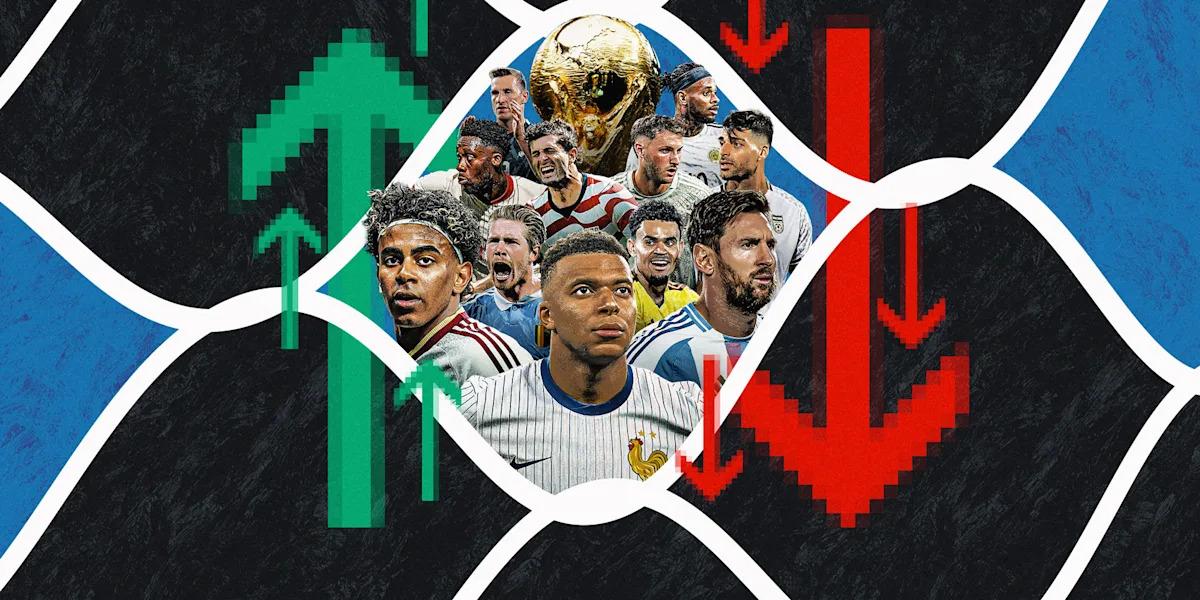
With the 2026 edition expanded to 48 nations, Paul Carr delivers a power ranking in five levels: France dominates, Spain and Argentina follow, while selections like Ecuador or Norway are among the sleepers to watch.
The 2026 World Cup will be the largest in history, expanded to 48 teams, 50% more than in 2022. Two weeks before kickoff, excitement is mounting in the United States, Canada and Mexico. If only a dozen teams really seem able to aim for the title, the expanded formula – with the possibility of eight third-placed teams advancing to the next round – leaves the door open to surprises.
Here are Paul Carr's power rankings for the 48 nations, organized into five distinct tiers.
Level 1: Favorites 1.France 2018 world champions and runners-up in 2022, France aims to become the second nation to reach three consecutive finals (Brazil has already done so twice). The talent pool is immense. The real question remains tactical: will Didier Deschamps, perhaps during his last tournament at the head of the Blues, open up his attack more? If the coach releases combinations with Kylian Mbappé, Michael Olise, Ousmane Dembélé, Rayan Cherki or Marcus Thuram, France can explode offensively. But Deschamps can also choose caution and rely on close victories. In any case, France has the highest ceiling.
-
Spain Favorite before Lamine Yamal's injury, Spain remains very solid and showed a high level at EURO 2024. It is no longer necessarily the historic tiki-taka, but La Roja has a modern game plan and, in a group including Cape Verde, Saudi Arabia and Uruguay, it seems to have one of the best funds and should approach the tournament with a sure plan for qualification.
-
Argentina Winner in 2022, Argentina aims to continue, a feat not seen since Brazil in 1962. Lionel Messi, who will celebrate his 39th birthday during the tournament, will undoubtedly not have to carry everything as the Argentine attack is full of options. However, a few defensive injuries can weaken the rearguard.
-
England The English hope to win a major trophy which has eluded them since 1966. Under the leadership of Thomas Tuchel, England should display a more offensive face than with Gareth Southgate, even if questions remain in the center of defense.
-
Portugal Among the most talented teams, Portugal relies on Bruno Fernandes and a battery of quality wingers (Bernardo Silva, Rafael Leão, Pedro Neto, João Félix). Cristiano Ronaldo, 41, remains a surface option who changes the team configuration when he plays.
-
Brazil Less optimistic than many, the author believes that Brazil suffers from a lack of transition solutions in the middle despite offensive arrows like Vinícius Júnior and Raphinha (and the possible presence of Neymar). Casemiro and Fabinho, less dashing than before, could end up weighing on the duration of the tournament.
-
Germany Julian Nagelsmann's team may lack sparkle and bench depth by usual standards, but the group remains competitive. The surprising return of Manuel Neuer, 40, for a fifth World Cup is a notable element.
 Image
Image
- Netherlands The Oranje, who pushed Argentina to penalties in 2022, present a solid team with Frenkie de Jong at the heart of the game and offensive options like Memphis Depay and Cody Gakpo. Ronald Koeman hopes to lead the selection towards a new great campaign.
Level 2: Teams that can create a surprise 9. Belgium Delicate transition for the Red Devils: the golden generation gives way, but talents like Jeremy Doku can carry the team. It remains to be seen the defensive solidity under Rudi Garcia.
-
Colombia With a world-class striker in the side (Luis Díaz) and players capable of lighting up matches (James Rodríguez, Jhon Arias), Colombia have a fluid attack and the ambition to surpass their best global campaigns.
-
Morocco Semi-finalist in 2022, Morocco is no longer a small thing. The selection has dropped very little since March 2024, with offensive assets like Achraf Hakimi and an ability to defend and counter effectively.
-
Senegal Experience and veteran leaders make up the Senegalese backbone: Sadio Mané in the lead, supported by Nicolas Jackson or Iliman Ndiaye. The selection remains ambitious despite sometimes uneven depth.
-
Ecuador Cited as one of the favorite sleepers, Ecuador only conceded five goals during the South American qualifiers. A solid defense (Willian Pacho, Piero Hincapié, Pervis Estupiñán) and a high-level midfielder with Moisés Caicedo make it a formidable team if the attack – very dependent on Enner Valencia – manages to find more scorers.
14.Uruguay Typically built according to the philosophy of Marcelo Bielsa: a strong midfielder (Federico Valverde, Manuel Ugarte, Rodrigo Bentancur) and a robust hinge. The challenge for Uruguay remains to launch its attack, around Darwin Núñez or a possible return of Luis Suárez.
- Croatia Finalist in 2018 and third in 2022, Croatia still relies on Luka Modrić and several veterans. Experience is an asset, but wear and tear on frames is a question.
Level 3: The “Cinderellas” of the tournament 16. Norway New presence in the World Cup since 1998, Norway appears to be an attractive outsider: the Erling Haaland–Martin Ødegaard duo is formidable and the team was a success in qualifying (eight victories). Group I, which includes France and Senegal, offers one of the highlights of the group stage with the Haaland–Mbappé duel.
(The ranking continues until it covers all 48 teams, organized into five tiers, but the passage above reflects the first tiers and teams presented by the author.)