Desmond Armstrong, black pioneer of the 1990 World Cup and legend of American football
By OnzeActu · · 3 min read

On the occasion of the 2026 World Cup co-organized by the United States, a look back at the career of Desmond Armstrong, a pioneering black-American defender during the 1990 World Cup, who helped advance football in the USA and inspires new generations.
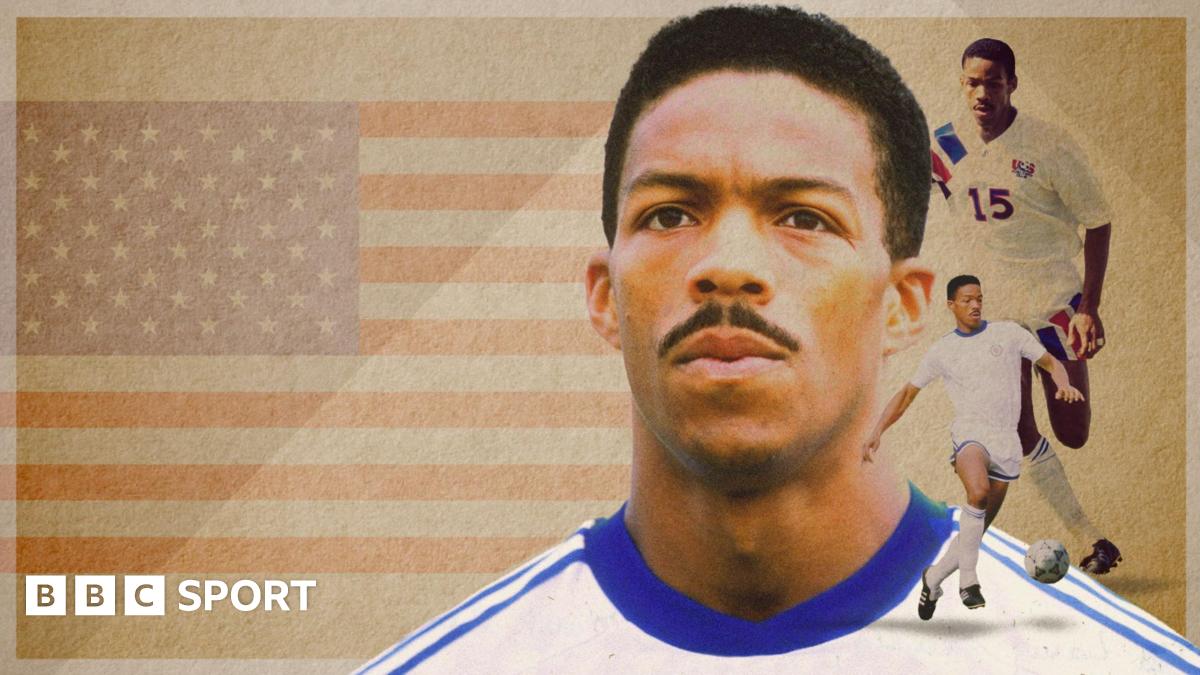
During the 1990 World Cup in Italy, Desmond Armstrong, then aged 25, had an experience as striking as it was unexpected. The first black player born in the United States to play in a World Cup final phase, he faced racial prejudice from his first steps in the media. “The first question was, ‘Why don’t you play basketball?’ No congratulations or words of encouragement,” he recalls. This stubborn stereotype associated African-Americans exclusively with basketball, suggesting that they had no place in football.
Despite this hostile context, Armstrong particularly shone in the match against Italy at the Stadio Olimpico, where he neutralized prolific striker Gianluca Vialli with a close score, helping to limit the United States' defeat to 1-0. This performance marks a major turning point for American soccer.
Armstrong discovered football at a very young age, watching Pelé on television thanks to a coach friend of the family. However, his path is not obvious, in a country where soccer has long developed on a paid model that excludes low-income families. Additionally, the collapse of the North American Soccer League (NASL) in 1985, while he was still a student, reduced professional prospects in the sport. He played in the Major Indoor Soccer League before becoming international in 1987 and participating in the Seoul Olympic Games in 1988.
The United States, host country of the 1994 World Cup, therefore approached Italia '90 without a real professional league outside of the indoor arena. The national team operated as a permanent selection with players on full-time contracts. Coach Bob Gansler and his players achieved the feat of qualifying by beating favorite teams, such as Trinidad and Tobago in the play-off.
 Image
Image
This success, however, remained little publicized in the United States, where interest in football was marginal. Furthermore, the racial situation was tense in the country, putting Armstrong's success under an important social and cultural prism. His rise was a source of inspiration for African-American communities and the growth of soccer in the United States.
After the World Cup, Armstrong continued his career abroad, becoming the first American to sign a professional contract in Brazil, at Santos FC, Pelé's former club. He recalls this period as “the high point” of his career, where he was able to rub shoulders with the football legend.
At the age of 31, he stopped his career to move into management, notably in Nashville, where he worked for more than 14 years to make football accessible to immigrant and less privileged populations. His community commitment is praised both by the young players he trains and by his peers.
His relationship with Jimmy Banks, the only other black player in the 1990 American selection, is also a strong testimony of brotherhood and exchange in a team faced with many obstacles.
Today, the current generation, embodied by players like Chris Richards, recognizes the importance of Armstrong's trajectory: “Without your contribution, your bravery, your courage, I would not be here. » The 2026 World Cup in the United States is part of a continuity where American football continues to grow in the footsteps of pioneers like Desmond Armstrong.