Gianni Infantino talks about a 64-team World Cup after 2026
By OnzeActu · · 6 min read

At the end of the 2026 World Cup, Gianni Infantino wishes to study the possibility of an extension to 64 teams for the World Cup, highlighting the need to include more countries in this global competition.
According to Bbc.
Context
Gianni Infantino, as FIFA president, plays a key role in the future planning of World Cups. His commitment to making the tournament more inclusive could have significant implications for how football is perceived and played around the world, particularly in relation to the 2026 World Cup in North America.
Why it matters
The idea of a 64-team World Cup after 2026 could transform the landscape of world football. Gianni Infantino underlines the importance of including more nations, thus allowing less represented countries to dream of participating in this prestigious tournament. It could also strengthen smaller nations' commitment to football development, providing them with a platform to compete against the best teams in the world.
Key points
- Gianni Infantino talks about a 64-team World Cup after 2026.
- At the end of the 2026 World Cup, Gianni Infantino wishes to study the possibility of an extension to 64 teams for the World Cup, highlighting the need to include more countries in this global competition.
- Gianni Infantino opens door to 64-team World Cup - BBC Sport.
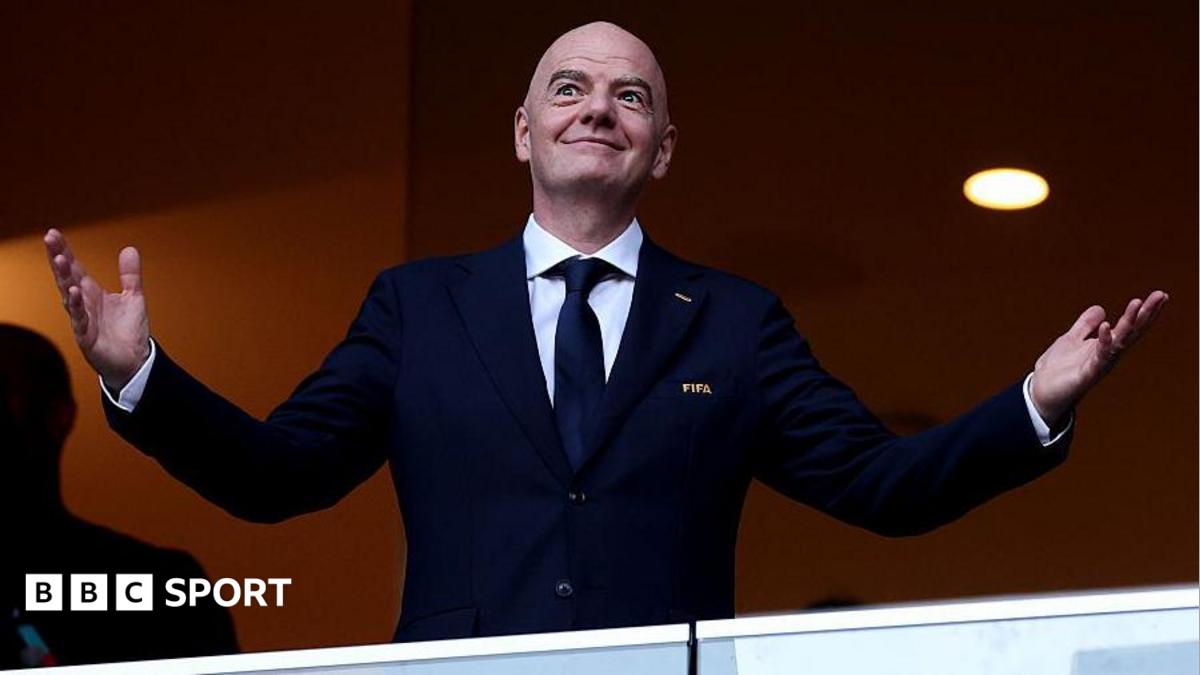
As the 2026 FIFA World Cup prepares to bring together 48 teams in North America, FIFA President Gianni Infantino recently opened the door to an upcoming expansion of the tournament up to 64 participants. In an interview with Swiss channel Blue Sport, Infantino explained that FIFA would examine this option after the 2026 World Cup, stressing that football must be representative of the entire globe.
“The organization of a World Cup must concern the whole world, not just Europe and South America, but truly all nations,” declared the leader. “Every country must be able to dream of participating in the World Cup. The quality of the teams is extremely high and continues to improve all over the world. If we don't give smaller nations a chance to participate, they will lose the motivation to improve."
Infantino builds on the success of the first 48-team World Cup, emphasizing in particular that nine of the ten African selections entered reached the knockout stages, compared to only five during the last World Cup organized in the 32-team format. This progression demonstrates the importance of expanding the competition to offer more nations the opportunity to shine.
In 2017, FIFA validated the expansion of the tournament from 32 to 48 teams from 2026. More recently, a proposal to expand to 64 teams for the 2030 World Cup was submitted by CONMEBOL in April 2025, although no official decision has yet been made. This 2030 edition, which will mark the centenary of the World Cup, will be played mainly in Spain, Portugal and Morocco, with three opening matches organized in Argentina, Uruguay and Paraguay, the founding countries of the tournament.
 Image
However, this idea faces resistance. UEFA president Aleksander Ceferin called the proposal a "bad idea" for the tournament and the qualifying process. Other officials, such as AFC President Sheikh Salman bin Ibrahim Al Khalifa or CONCACAF President Victor Montagliani, fear that this extension will generate “chaos” or harm the overall balance of football.
On an organizational level, a World Cup with 64 teams would involve meeting major logistical challenges. Indeed, the 2026 tournament will take place in three geographically extended countries, while the 2030 tournament will be organized in six nations. The expansion to 64 selections would require significant reception capacities - a question in particular for countries like Saudi Arabia, expected for 2034.
Despite these obstacles, the expansion represents a political advantage for Infantino: by offering more places, FIFA allows almost a third of its 211 members to participate, which reinforces the universal dimension of football and generates additional income to be redistributed among the member federations.
Soon in North America, the 2026 World Cup will therefore be a real life-size test before FIFA plans to push the limits of the biggest footballing event in the world even further.
The rest
After the 2026 World Cup, FIFA, under the leadership of Gianni Infantino, will assess the feasibility of a 64-team World Cup. Discussions around this expansion could also be influenced by the success of the 48-team format, which has already allowed more nations to progress in the tournament. Decisions regarding the future of the competition will be crucial in defining football's role in the 2026 World Cup and beyond.
Frequently asked questions
What did Gianni Infantino propose regarding the World Cup?
Gianni Infantino raised the possibility of expanding the World Cup to 64 teams after the 2026 World Cup.
Who confirmed the idea of a 64-team World Cup?
The idea was confirmed by Gianni Infantino, FIFA President, during an interview.
Why is this proposal to expand to 64 teams being made now?
Infantino stressed that football must be representative of all nations and that enlargement would allow smaller nations to participate and progress.
What changes are planned for the World Cup after 2026?
One change being considered is the increase
tation of the number of participating teams to 64 for future editions, starting with 2030.
What is the planned date for the next World Cup after 2026?
The next World Cup after 2026 is scheduled for 2030.
Related Articles
Frequently asked questions
📰Related articles
- 2026 World Cup: Egypt qualified for the round of 16, which
- Rogers details how to focus on Norway after the
- France, third selection to reach three semi-finals
- The World Cup, a turning point for Tarik Muharemovic in the viewfinder
- The Netherlands team soaks up the atmosphere before the start of the
- Unai Simón praises Lamin Yamal’s defensive self-sacrifice at Euro 2026
- Declan Rice lined up in the quarter-finals of the World Cup despite a
- Tom Lockyer signs for Melbourne Victory
- Portugal coach Jorge Jesus assesses Cristiano's form
- Before the quarter England - Norway: friendly clashes between
- Spain: Yamal “I wanted to score, but the important thing is that
- Ghana: Carlos Queiroz resigns after only five matches at the