Russian goalkeeper Roman Kerimov compares the atmosphere of the Cup
By OnzeActu · · 5 min read
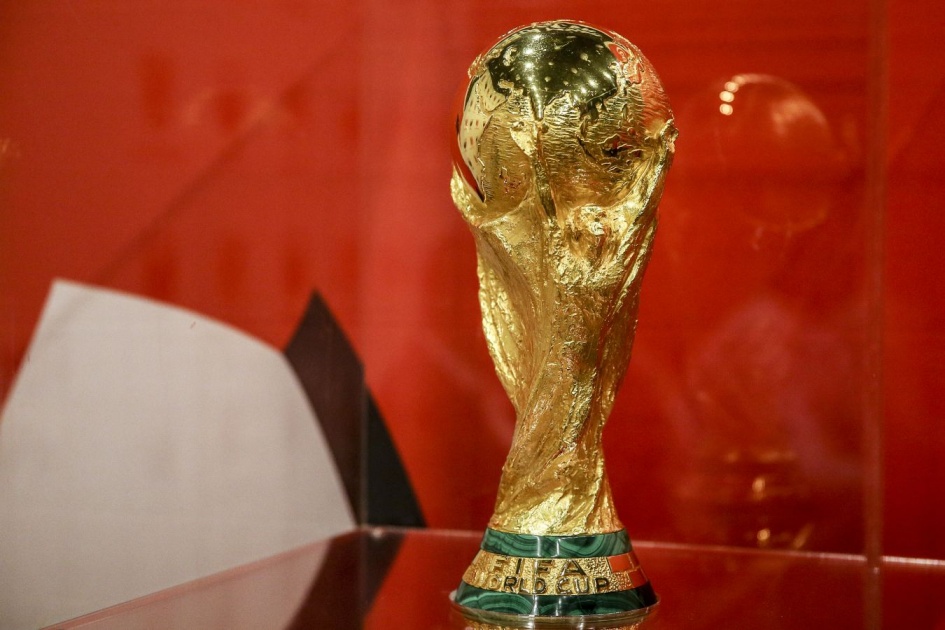
Roman Kerimov, Russian goalkeeper for Dynamo Houston, exclusively discusses the differences in atmosphere between the 2018 World Cup organized in Russia and the 2026 World Cup organized jointly by the United States, Mexico and Canada. While welcoming the popularity of football in the United States, he noted less fervor among supporters during this World Cup spread over three countries.
According to Championship.
Why it matters
Roman Kerimov's comparison between the 2018 and 2026 World Cup highlights the challenges of hosting a tournament in multiple countries. While the 2018 World Cup was marked by palpable collective fervor in Russia, the geographical distribution of the 2026 World Cup seems to dilute this atmosphere. This raises questions about the impact of the multi-national organization on the fan experience.
Key points
- Russian goalkeeper Roman Kerimov compares the atmosphere of the World Cup.
- Roman Kerimov, Russian goalkeeper for Dynamo Houston, exclusively discusses the differences in atmosphere between the 2018 World Cup organized in Russia and the 2026 World Cup organized jointly by the United States, Mexico and Canada.
- Rossiyskaya вратарь в США сравнил атмосферу на ЧМ-2026 and и ЧМ-2018.
Roman Kerimov, Russian goalkeeper for Dynamo Houston, shares his exclusive impressions of the atmosphere he observes around the 2026 FIFA World Cup held in the United States, Mexico and Canada. He compares it with that, much more marked, of the 2018 World Cup, organized in Russia.
“Do you feel the atmosphere of this 2026 World Cup? » asks journalist Grigory Telingater. “Not really,” Kerimov replies. “In 2018, supporters were everywhere in Moscow, with signs, flags, real fervor in the streets. Here, it’s calmer, probably because the competition is spread across three different countries, which dilutes the atmosphere a little,” he analyzes.
Although he has not directly attended matches at this 2026 World Cup, Kerimov follows the matches from a fan zone located near the Dynamo Houston stadium, a place where several fans meet regularly. “I go at least twice a week to watch the matches in the fan zone. And those who do not have access can watch the matches in the stadium itself,” he explains.
This comparison highlights the difficulties in recreating the dense and unified atmosphere of a tournament organized in a single country, as was the case in Russia. Organized across three North American nations, the 2026 World Cup sees a wider geographical distribution, which complicates the concentration of supporters in the same place.
Image
However, the regular presence of fans in fan zones shows that football is gaining popularity in the United States, where the sport is booming, notably thanks to MLS and upcoming projects around the Women's and Men's World Cup. This experience also allows Kerimov, a player directly involved in the local scene in Houston, to experience these major international competitions in a different but always exciting way.
Roman Kerimov, through his shared perspective, offers valuable testimony on the evolution of world football, the challenges of a multi-country organization, and the new dynamics of sport in the United States, a few months before this highly anticipated final phase.
This experience also illustrates the logistical and cultural constraints imposed by a continental edition of the World Cup, while testifying to the gradual enthusiasm around American football, still in its maturity phase but already promising for the future.
In this context, the 2026 World Cup could well mark an important step in the diffusion of football on the North American continent, while widening the gap with the concentrated fervor, traditional of more European or South American World Cups.
The rest
Kerimov will likely continue to follow the 2026 World Cup from his fan zone in Houston, where he shares his passion for football with other fans. Kerimov's observations could also prompt organizers to think about ways to improve fan engagement during the tournament. As the next stages of the competition approach, interest in the atmosphere of the matches could increase, especially if popular teams advance in the tournament.
Frequently asked questions
What did Roman Kerimov say about the atmosphere of the 2026 World Cup?
Roman Kerimov compared the mood of the 2026 World Cup to that of 2018, noting that the current atmosphere is calmer and less fervent.
Who asked Roman Kerimov's opinion on the 2026 World Cup?
Journalist Grigory Telingater asked Roman Kerimov about the atmosphere of the 2026 World Cup.
Why does Roman Kerimov think the atmosphere is different for the 2026 World Cup?
Kerimov believes that the atmosphere is less marked due to the competition being spread across three countries, which dilutes the concentration of supporters.
What are Roman Kerimov's activities during the 2026 World Cup?
Roman Kerimov follows the matches from a fan zone near the Dynamo Houston stadium, where he goes at least twice a week.
What changes are noted by Roman Kerimov between the 2018 and 2026 World Cups?
Kerimov emphasizes that the 2026 World Cup, organized over three nations, makes it more difficult to create a unified atmosphere compared to that of 2018 in Russia.
Related Articles
Frequently asked questions
📰Related articles
- Didier Deschamps criticizes arbitration after France-Spain, Pierluigi
- Lionel Messi sets new World Cup assists record
- Liverpool interested in Lille midfielder Ayyoub Bouaddi
- 2026 World Cup: England takes the lead against
- Carlos Queiroz announces his departure from the Ghanaian selection
- The Argentine selection welcomed on a red carpet and by an orchestra
- Vladislav Radimov names Spain as big favorite for the World Cup