2026 World Cup: how France and Iraq experienced the two-hour interruption due to weather
By OnzeActu · · 5 min read

Suspended at half-time due to a violent storm, France-Iraq in Philadelphia resumed after almost two hours of interruption. The Blues, already ahead at the break, finally won the match 3-0; Kylian Mbappé scored twice in his 100th international match.
It was a long evening for the players, the staff — and for the 68,344 spectators present at Lincoln Financial Field in Philadelphia. A match that started at 5:00 p.m. (local time) ended at 8:47 p.m., the restart having been delayed for almost two hours for safety reasons linked to unfavorable weather conditions.
The ominous clouds had already formed when Canadian referee Drew Fischer blew the halftime whistle at 5:49 p.m., with France leading 1-0. Shortly after, a heavy downpour fell with a risk of thunderstorms and lightning. It was ultimately deemed safe to resume the game at 8:00 p.m.
At the restart, the Blues, keen not to let the opportunity slip away, scored two new goals to win 3-0. Captain Kylian Mbappé scored a double on the occasion of his 100th selection, and France thus qualifies for the next round (the 32nd finals).
There was no hydration break in the second half and the referee only allowed two minutes of added time at the end of the match.
“It was a very long evening,” admitted Mbappé. “We spent a lot of time waiting. It's emotionally and mentally exhausting because you have to stay totally focused and involved in the locker room. Staying in the locker room for an hour and a half — almost two hours — while maintaining concentration is very difficult. It takes a lot. The players made a huge effort, as did the staff. »
“We played cards,” joked coach Didier Deschamps. “No, well, we were waiting. We had slots that were constantly shrinking. I had a good time with my players and we laughed a little. It's a security issue. We can't fight against rain and lightning. It doesn't make me angry. These are very special circumstances and I hope it doesn't happen again. It was important not to take any risks. »
It was the 42nd match of this World Cup - and the first interrupted due to weather. FIFA cannot set rules alone in the event of dangerous weather conditions and must follow the recommendations of local authorities. In the United States, these are notably those of the National Oceanic and Atmospheric Administration (NOAA) which are applied: if lightning is detected within a radius of eight miles (approximately 13 km) around a stadium, the match must be stopped.
 Image
Image
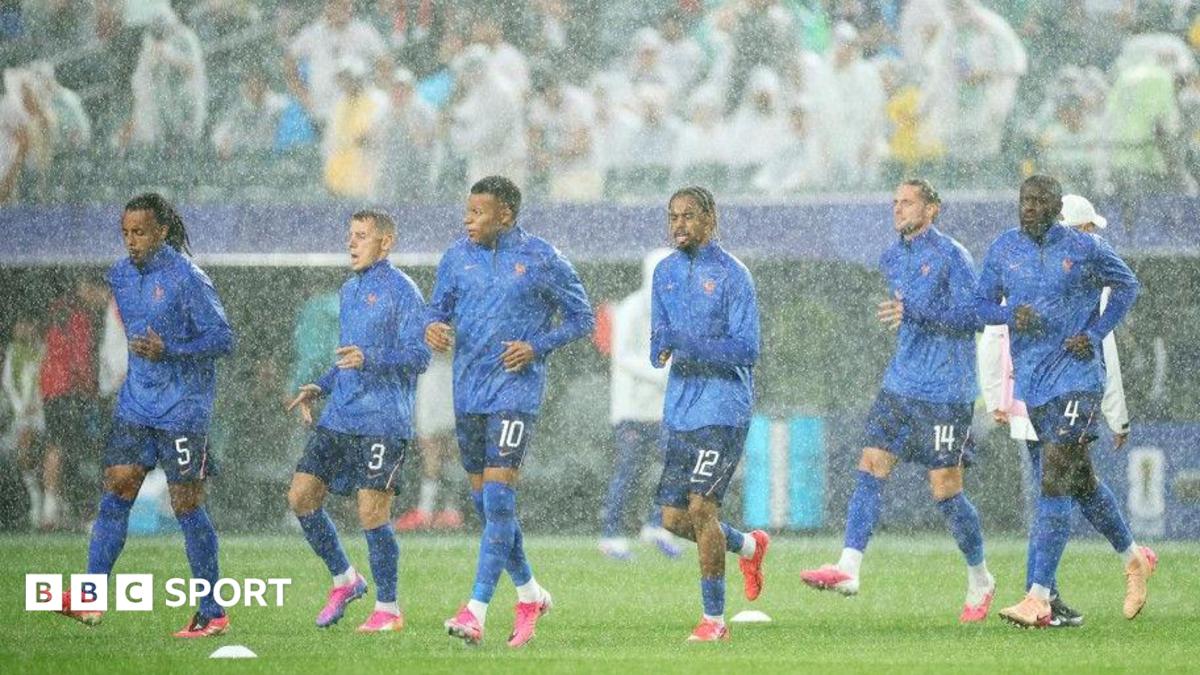
In the hours leading up to kickoff, local cable networks speculated about the possible impact of the weather on the game. The sun was shining in Philadelphia a few hours before the game, but after the halftime whistle, torrential rain and threats of thunderstorms forced an interruption. During the break, the public was invited to take shelter in the stadium corridors.
Despite this withdrawal, most of the supporters remained in the enclosure and the stand appeared once again well filled when the match resumed. The players came out to warm up about an hour and forty hours after the interruption, and the throw-in was further delayed while staff used squeegees to remove standing water from the field.
At the restart, an error on a restart by the Iraq goalkeeper gave Mbappé the second French goal. Iraq's Australian coach, Graham Arnold, believes that the long interruption may have contributed to this error: “I told the players before coming out that it was a question of who recovered mentally the quickest. The most disappointing thing is that the mistake cost us,” he explained. “The two-hour stoppage obviously made things a lot more difficult for the players. This is the first time I've experienced this as a coach or as a player. »
Arnold added that he took advantage of the break to review footage from the first half with his players: “It was more about letting the players relax and getting them ready to go out again. It was a unique experience for all of us. »
Regular loudspeaker announcements kept the public informed during the interruption. When the decision to resume was announced, it sparked one of the biggest ovations of the evening. The atmosphere changed suddenly and the supporters, covered in ponchos, danced in the stands.
“It was like a new match starting after the interruption,” said French defender Jules Koundé. “We cycled (on site) to stay active. Then we stopped and talked while waiting to come out to warm up. We all wanted to resume and finish the match. It was also necessary to ensure that the terrain was passable because there were flooded areas. »
For commentator and former Scottish winger Pat Nevin, present at the match for BBC Radio 5 Live, the long break was ultimately rather favorable to the French: “The main effect is that your routine planned for the next few hours is disrupted – rehydration, refueling, food – everything is slightly different. Strangely, the break seemed to suit the French team because they came back... and played the rest of the match. »
Former West Ham assistant Edu Rubio – now assistant coach at Sporting Kansas City – also spoke about the experience of postponements for BBC Sport, referring to friendlies played by West Ham in Florida two years ago: “Two of our four friendlies were delayed due to storms. Here, they are very strict about it — and that's normal. Cultures and staffs have different approaches. We must follow the protocols: we return to the locker room and we are informed every 20 minutes. The first 20 minutes are for players to relax and change into warm-up gear. They do a little cycling, stretching, some do yoga. For the next 20 minutes — when the interruption lasts 45 minutes — we install games like football and tennis to distract them and prevent them from thinking too much about the weather. We also play two-minute video clips to remind them of the instructions. These interruptions can be painful but we keep things simple: yoga, music, a little relaxation. Beyond 45 minutes, honestly, I don't really know what to do. »