2026 World Cup: the evolution of Lionel Messi, pillar of Argentina
By OnzeActu · · 4 min read

At 38, Messi is aiming for his sixth World Cup and remains at the center of Argentina's ambitions. From the elusive winger to the modern 'enganche', including the false nine who redesigned defenses, he has evolved at each stage of his career to maintain his influence on matches.
If Argentina wants to become the first nation to retain its world title since 1962 – and only the third in history – it's a safe bet that Lionel Messi will be at the heart of it. At 38, Messi is preparing for his sixth World Cup, a record shared with Cristiano Ronaldo and Guillermo Ochoa, but it will not be the same player who debuted with Barcelona in 2003.
Most players decline. The older ones find ways to adapt. Ronaldo reinvented himself as a surface fighter when his speed waned. Messi didn't just "manage" the decline: he transformed his game to continue to dominate and stay ahead of a constantly changing football.
When Ronaldinho, then the club's biggest star, first saw him training, he said: "He will be the best." Two years later, in August 2005, Messi revealed himself to the general public during the Joan Gamper Trophy against Juventus. Fabio Capello, then coach of the Old Lady, was so surprised by the 18-year-old that he reportedly tried to recruit him.
Under Frank Rijkaard, the idea was already clear: Messi had to be “at the center of everything”. But it is with Pep Guardiola, who arrived in 2008, that the movement accelerates. Initially confined to the right, Guardiola brought him closer to the heart of the game for defensive reasons - Messi did not come back enough - but also because he felt that he would always end up at the center of decisions. The major tactical shift took place on May 2, 2009, at the Bernabéu. Guardiola moves Messi away from the line and places him at the forefront, without asking him to be a traditional center forward: he must win, touch, decide. The plan works: 6-2 and the rebirth of the false nine.
The impact is colossal. When Messi breaks between the lines, the opposing defenders are caught in overhang: following him creates spaces, not following him leaves him on a leash. With Xavi, Andrés Iniesta and Yaya Touré behind him, and Eto'o and Henry widening the play, every opposing reaction became wrong. Guardiola will reiterate the idea, notably during the C1 final against Manchester United where Messi scores with a header.
Between 2011 and 2013, Messi scored 96 goals in 69 La Liga matches. The Ballon d'Or, received for the first time in 2009 at the age of 22, will almost become a habit: he won it again in 2010, 2011, 2012, 2015 and 2019 - and will ultimately total eight trophies.
 Image
Image
The demographic transition of the Barcelona locker room also forced Messi to reinvent himself. After the departures of Xavi (2015) then Iniesta (2018), he sometimes finds himself expected to carry out both the creation and the finishing. He then evolves towards an “enganche” role: less in pure depth and more in the organization of the game, alternating assists and goals. In 2019-20, he compiled 22 assists and 25 goals in 33 La Liga matches. His last full season at Barcelona (2020-21) brought him 30 goals and 11 assists in 35 La Liga matches.
His move to Paris Saint-Germain confirmed the change: 11 goals and 15 assists in 34 appearances in all competitions – for the first time at club level he finished a season with more assists than goals. An Argentinian columnist summed up the metamorphosis: “a goalscorer who became an Iniesta”. At Inter Miami and throughout the 2024 Copa America, Messi walks more than he sprints: he was criticized for this in the past, today it is the sign of total mastery of the tempo.
The weight of the selection also shaped the player. Becoming captain in August 2011, he went through a period fraught with defeats: the 2014 World Cup final lost to Germany, the 2015 and 2016 Copa America finals lost to Chile on penalties. After considering quitting, he comes back and changes his attitude: the 2021 Copa America, won against Brazil at the Maracanã, finally liberates Argentina. His speech before the final stood out as a moment where he really galvanized the group.
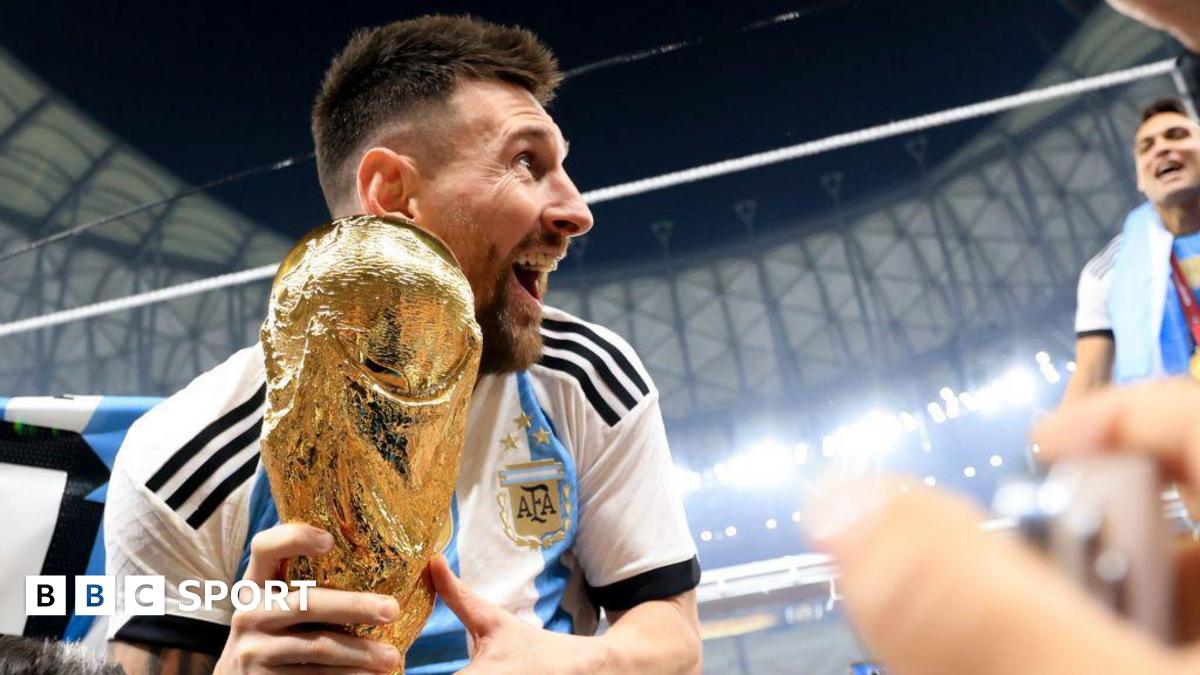
The Messi of the 2022 World Cup is the synthesis of these transformations: there is the sprint found against Josko Gvardiol in the semi-final against Croatia, the sense of timing and passing in the final against France (including the pass for Nahuel Molina), and the composure on penalties. “Football has changed a lot,” he confides to Zinedine Zidane in 2023, aware of having played through several tactical and physical eras.
“The last Messi is always the best Messi,” said Pablo Aimar, his childhood idol. In many ways, this remains true. What Messi has accumulated over two decades is not just a collection of titles and statistics: it is proof that a player can reinvent himself at every stage of his career. From the young winger who dazzled Capello to the false nine who redrew the European tactical map, from the conductor who became a liberating captain to the veteran who saves his efforts to decide key moments, Messi has continued to become someone new.
The road to the 2026 World Cup will still generate many superlatives about it. Yet they risk missing the essential point: Messi's story is not just that of his abilities — it is that of his successive reinventions.
 Image
Image