Shinji Ono, the Japanese legend of Feyenoord: “Maradona never received as much attention as me”
By OnzeActu · · 3 min read
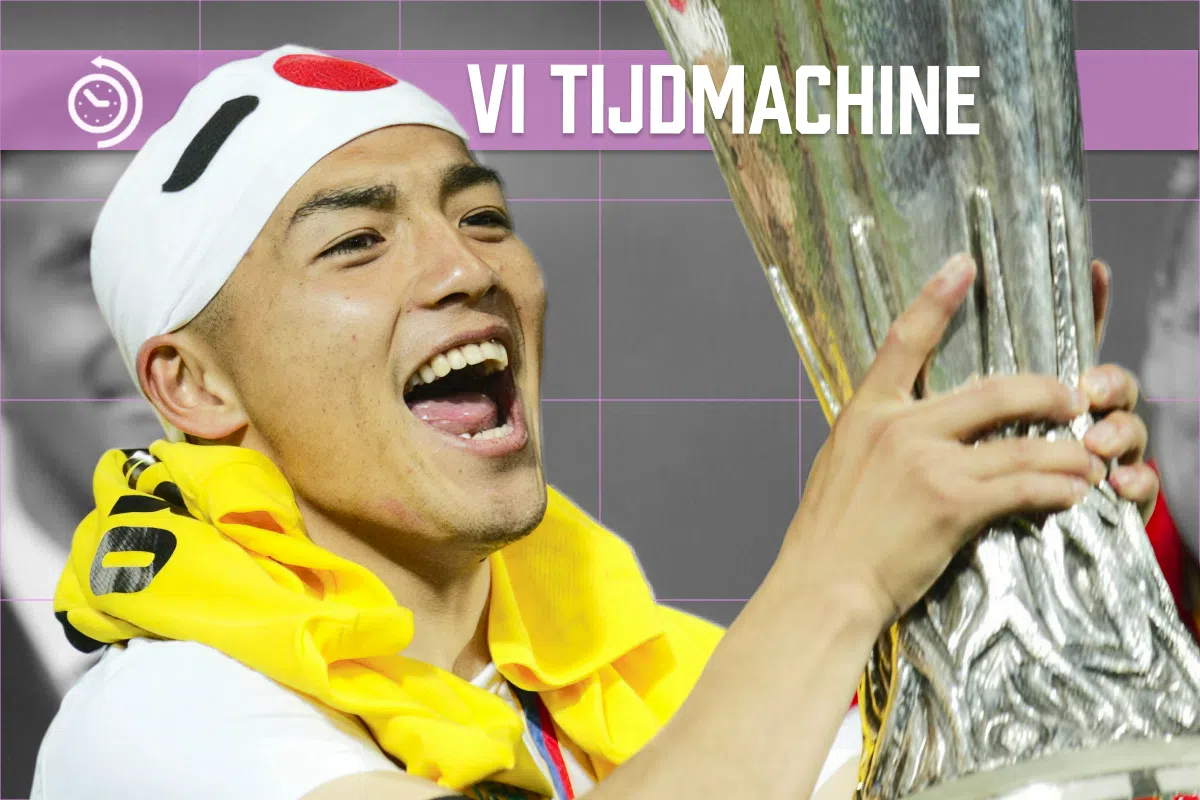
As the Netherlands – Japan match at the 2026 World Cup approaches, focus on Shinji Ono, talented Japanese midfielder and great architect of Feyenoord's European coronation in 2002. He looks back on the media pressure in Japan, his development in the Netherlands and the influence of Feyenoord in his native country.
On the occasion of the next Netherlands – Japan duel as part of the 2026 World Cup, the spotlight will once again be on Shinji Ono. Considered by many as the most elegant Japanese footballer to have graced European pitches, Ono remains, two decades after winning the 2002 UEFA Cup, an essential face of Japanese football and Feyenoord.
Behind his discreet smile, the Japanese international already spoke at the time, in an interview with Martijn Krabbendam, about the pressure and demands he was under, whether in Japan during his youth or in the Netherlands with Feyenoord. Faced with the high expectations of his coach Bert van Marwijk, Ono had to assume natural leadership, inherited from his formative years in Japan: “At school, I was captain simply because of my qualities as a footballer, but the role of leader is very different here and there… I learned a lot, especially mentally. »
Accustomed to Japanese rigor – even receiving physical punishments after a defeat at school – he had to adapt to the Dutch tactical style and mentality. Initially an observer during his debut at Feyenoord, he gradually established himself as a key player, finding his feet alongside Paul Bosvelt and adapting to a more remote position than that of number 10 he favored in Japan.
Despite the recurring criticism of a supposed lack of investment, Shinji Ono has always strived to give his best: "I try to play simple, sometimes it doesn't work and people say that I'm nonchalant... But that's my way of approaching the game." At Feyenoord, he wanted to take a step forward and increase his statistics, especially in goals scored: "Never more than nine goals per season, that's too few. There, I’m already at five…”
Image
A true phenomenon followed everywhere by the Japanese media, he recounts the enthusiasm he receives in his country, much higher even than that received by Diego Maradona according to former player Zeljko Petrovic: “In Japan, photographers follow me everywhere, Maradona was not entitled to as much attention…”
His choice to join Feyenoord rather than another club – even though he was courted by half of the J-League – results from a desire for evolution and a passion for popular clubs, close to their supporters. “Urawa, like Feyenoord, it’s a unique atmosphere driven by incredible fans. »
Ono reveals how Feyenoord is today a reference in Japan, with matches being broadcast live and followed throughout the country. He also notes the meteoric growth of Japanese football, of which he was a pioneer with Hidetoshi Nakata.
His main memories remain linked to the victory in the 2002 UEFA Cup and his decisive assist on Jon Dahl Tomasson's goal in the final. “A final at De Kuip was exceptional. This European season will have marked my career. »
Grateful to his teammates and the Dutch public, he emphasizes having grown both as a player and as a man: “Feyenoord symbolizes for me the fighting spirit, the tenacity, the popular spirit of football. » A legacy still alive, at a time when Japan dreams of shining again on the world stage.