Philippe Diallo and UEFA's historic bet for
By OnzeActu · · 4 min read
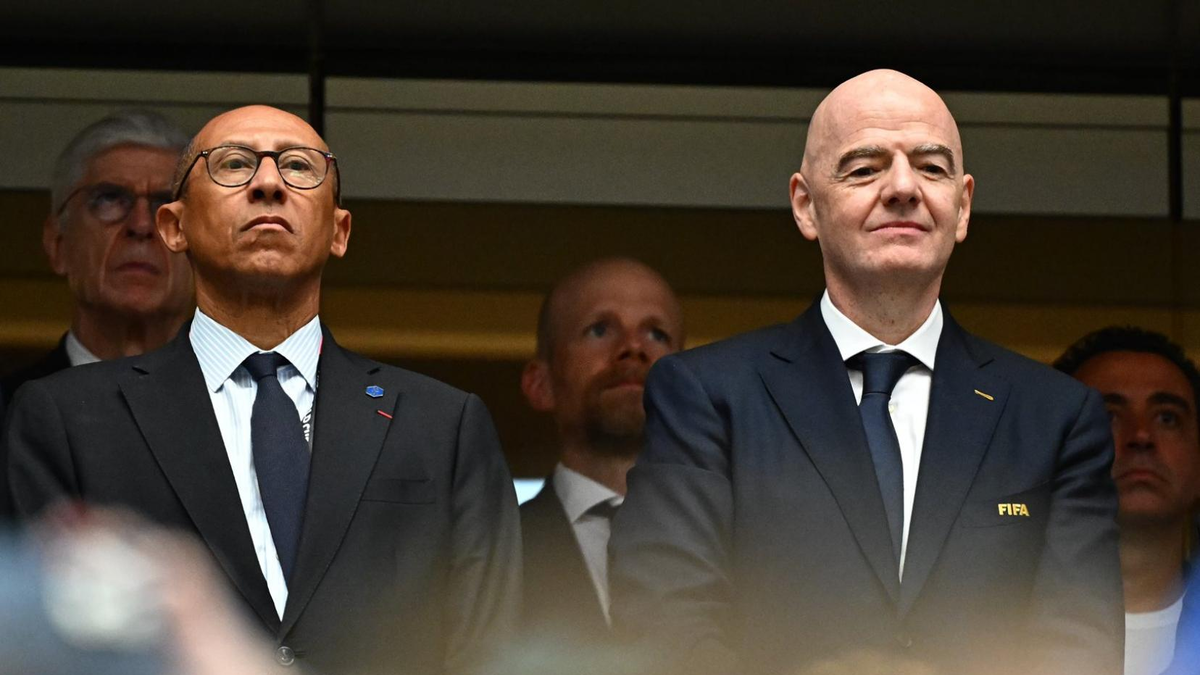
Philippe Diallo, chosen by UEFA, is entering the race for the presidency of FIFA to try to dethrone Gianni Infantino, in an election promised to be confrontational next March in Rabat.
Why it matters
Philippe Diallo and UEFA's historic gamble to overthrow Gianni Infantino carries wider implications for the teams, players, and competition context discussed in this report.
Key points
- Philippe Diallo and UEFA's historic bet for.
- Philippe Diallo, chosen by UEFA, is launching the race for the presidency of FIFA to try to dethrone Gianni Infantino, in an election promised to be confrontational next March in Rabat.
- Philippe Diallo goes to Gianni Infantino.
A look back at a symbol: France is the country where FIFA was born, and figures like Robert Guérin and Jules Rimet have long held the presidency of the organization. But for several decades, French influence at the head of FIFA has faded. Several French attempts at reconquest have failed or aborted — from Marcel Lafarge in the 1950s to Jérôme Champagne and David Ginola in 2015, then Michel Platini after the departure of Sepp Blatter.
Today, Philippe Diallo, 63, succeeds this part of history with a profile deemed “reassuring” by Aleksander Ceferin and several European leaders. Former leader of the UCPF and influential member of the FIFA and UEFA committees, Diallo gradually broke with Infantino after having for a long time shown a certain support. He officially launched his campaign in Paris, denouncing the unilateral decisions taken in recent months at FIFA and saying it was time to put an end to these practices.
The road to Rabat, where the FIFA Congress will be held next March, however, remains strewn with pitfalls. Gianni Infantino, candidate for a controversial fourth term, has already launched a vast international campaign after the 2026 World Cup, increasing travel and proposing a financing plan of 3.4 billion dollars for the development of world football. This system has notably enabled it to garner public support from numerous federations, particularly in Africa and Asia.
Image
The outcome will depend on the vote of the 211 member federations (UEFA 55, CAF 54, AFC 46–47, CONCACAF 35, OFC 11, CONMEBOL 10), who will vote by secret ballot according to the English alphabetical order of the countries. To win, you will need to reach at least 106 votes; if three candidates are in the running, the first round requires a two-thirds majority before successive eliminations.
Faced with this arithmetic, Diallo benefits from logistical and financial support from UEFA — a campaign budget estimated at around half a million euros — as well as notable allies: French President Emmanuel Macron, figures like Zinedine Zidane, and voices critical of Infantino like Jürgen Klopp have welcomed the initiative. Diallo's campaign team is also seeking to rally heavyweights from FIFA's past: Kevin Lamour, former number three of the institution, is expected to play a key role in the operation.
Despite these advantages, several observers believe that Diallo remains a “compromise choice” sometimes lacking “mass notoriety” to appeal to all regions. UEFA, however, is banking on its profile, which is considered moderate and capable of reassuring the African and Asian federations, particularly after the criticism leveled by certain countries over recent FIFA decisions.
The next few months, until the official presentation of Diallo's program on December 6 in Belfast and then the active campaign at the start of the following year, promise to be decisive. Even if overthrowing Infantino remains an immense task, the entry into the running of Philippe Diallo breaks the continuity of the last two elections and transforms the Rabat deadline into a real political confrontation for the future of world football.
The rest
The next phase should bring official updates, squad decisions, and a clearer picture of what this means on the pitch.